Eliza Gaynor Minden
Founder, Gaynor Minden
Wednesday, April 9th, 2014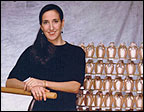 Ballerinas started wearing point shoes in the late 19th century. Despite advancements in the dance world, the construction of toe shoes has remained pretty much unchanged. The same materials– paste, cardboard, paper and leather– are still used today, and the result is a dancer prone to excess pain and injury. Eliza Gaynor Minden, a former dancer, designed a more modern, longer lasting point shoe to address this stress.
Eliza explains how Gaynor Minden shoes successfully overcame controversy and finally gained acceptance among the world’s leading dancers, from scratch.
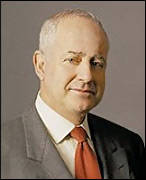 Jules is the founder of Kroll, the leading risk consulting firm. Jules is considered one of the pioneers of the modern day corporate investigative and security industry, investigating individuals, governments and corporations. Kroll’s work includes restructuring Enron after its bankruptcy and uncovering Ferdinand Marcos’ secret wealth in the mid 1980s.
 Some entrepreneurs start companies, but others pioneer whole industries. Jake Burton, founder of Burton Snowboards, both built an international snowboard company and helped to turn snowboarding from an underground activity to a more widely acceptable sport. He convinced ski resorts one by one to allow snowboarders on the mountains, and, with his help, snowboarding became an Olympic sport in 1998.
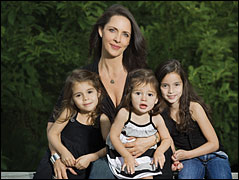 The ancient practice of swaddling, or wrapping a baby in a tight blanket, proves to have benefits for a baby’s health and development. Growing up in Australia, Raegan Moya-Jones was exposed to mothers swaddling their babies with muslin, a type of cotton. Years later, after a move to the United States and the birth of her first daughter, Raegan could not find the muslin blankets her family used back home. As a result, Raegan started Aden and Anais to fill this need, and the wraps are now increasingly popular among new families across the United States.
 Vitamin consumption is often taken for granted in prosperous nations. In contrast, populations in developed countries often do not have access to essential vitamins or minerals. Especially pregnant women in developing countries run the risk of denying their fetuses proper nutrition because basic foods are not fortified with micronutrients like folic acid, iron, iodine, and vitamin A.
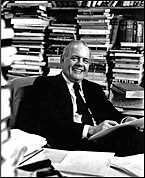 During the New York newspaper strike of 1963, people missed reading the New York Times Book Review. A literary group of friends—including New York Review of Books founding editors Bob Silvers and Barbara Epstein—decided to start a book review of their own. With essays on politics, science, art, and books, the
  Bob Moore founded Bob’s Red Mill in 1978 after an earlier career in the auto mechanics business. The company produces all natural whole-grain products that are prepared in the age-old tradition of quartz stone grinding. Based in Portland Oregon, Bob’s Red Mill provides roughly 400 natural grain products to natural food stores across the United States. In 2010, at 81 years old Bob turned the company over to his more than 200 employees through an ESOP (Employee Stock Option Plan).
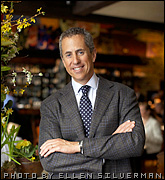 A successful restaurant is more than a dining establishment; it is a form of entertainment. Danny Meyer, with his emphasis on hospitality, has become one of New York’s most successful restaurateurs. His restaurants include the Union Square Cafe, Gramercy Tavern, Eleven Madison Park, and The Modern, at the Museum of Modern Art.
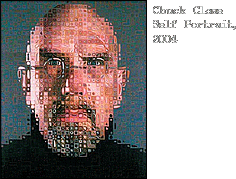 When we see a painting hanging on the hallowed walls of a museum, we get a sense of an artist’s technique and imagination, but we don’t get a sense of the process and hurdles that artist faced on the way to critical acclaim. What goes on behind the scenes, or behind the canvas? How does a starving artist becoming a financially secure cultural icon?
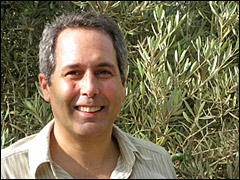 Growing up in the middle of a civil war in Lebanon, Khalil Nasrallah and his family made their way to Egypt where they founded a leading natural foods company in the middle of the desert. Their company, Wadi Foods, pioneered the production of high quality, healthy food products in the Middle East.


